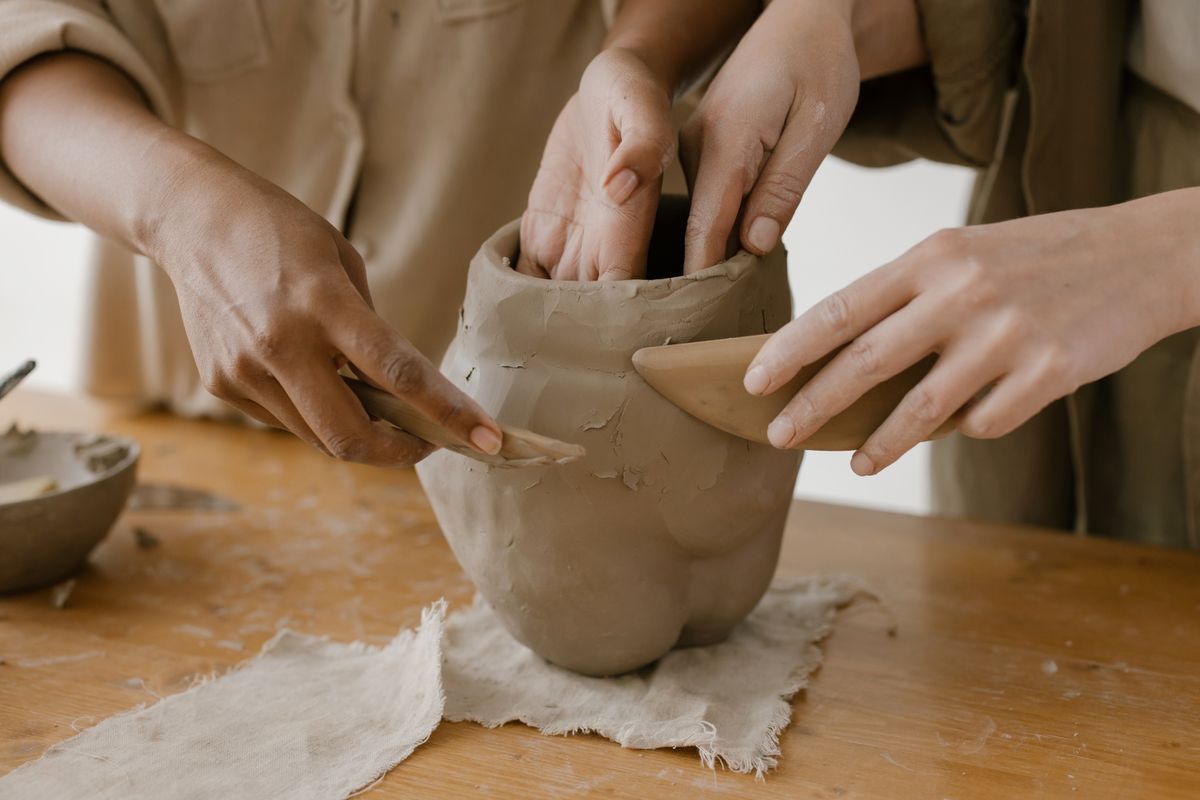
A bowl passes through more hands and stages than most makers expect: wedging, throwing, wiring off, drying to leather-hard, trimming the foot, handling bisque, glazing, and the long quiet of the kiln.
In class we slow each stage down. You will learn to read the clay — when it is too wet to trim, when a rim needs compressing, when to stop touching and let it rest.
By the final session your bowl comes out of the glaze kiln with your mark on the foot. Wash it, use it daily, and notice how quickly handmade becomes the only kind you want.
Written in the Studio
Priya Nair throws, trims and fires at Inkwell Lane, and wrote this between kiln loads. Every guide here is tested at our eight wheels before it reaches this page.
Keep Reading